| Sign In | Join Free | My chinacomputerparts.com |
|
| Sign In | Join Free | My chinacomputerparts.com |
|
| Categories | Nano Ceramic Film |
|---|---|
| Brand Name: | YUXIN KOOLFILM |
| Model Number: | Nano Ceramic Film |
| Certification: | ROHS, ISO9000,MSDS,CE |
| Place of Origin: | China |
| MOQ: | 1 |
| Price: | $50-175 |
| Payment Terms: | L/C,T/T,Western Union,D/A,D/P,MoneyGram |
| Supply Ability: | 1000000 Rolls |
| Delivery Time: | 3-7 working days |
| Packaging Details: | 162*14*15cm per box |
| Item: | Nano Ceramic Film |
| Size: | 60inch*100ft |
| Vlt: | 1%-80% |
| Glue: | Imported Glue |
| OEM/ODM: | Accpetable |
| Sample: | Available(free Sample) |
| MOQ: | 1 Roll |
| Installation Method: | Wet Installation |
| After-sales service: | 24hours online |
| Company Info. |
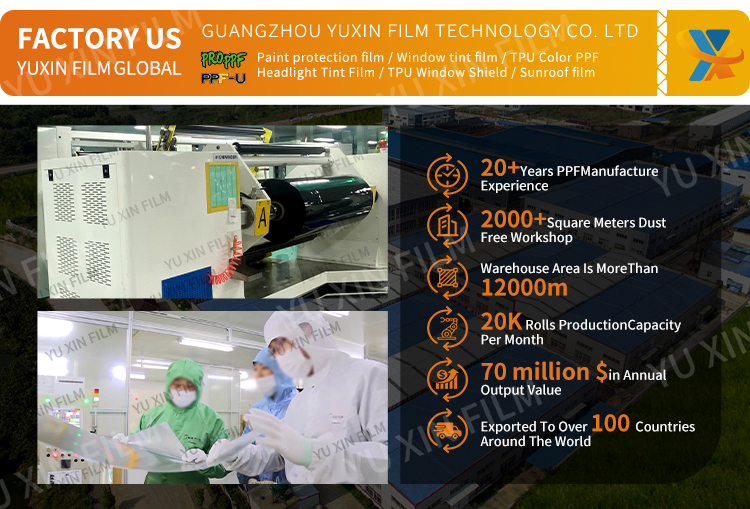
| Guangzhou Yuxin Film Technology Co., Ltd. |
| Verified Supplier |
| View Contact Details |
| Product List |
What are the differences between different types of window film?
Type | Core Structure Characteristics | Typical Thickness | Applicable Scenarios |
Dyed Film | Only dye layer + glue layer | 1-1.8mil | Low-end model, limited budget |
Metallic Film | Multilayer metal + polyester substrate | 2-3mil | In high temperature areas, pursue high insulation |
| Nano Ceramic Film | Nano-ceramic particles + PET layer | 2-4mil | High-end models with signal penetration |
| Privacy Film | Dark dye layer + one-way perspective technology | 2-3mil | Commercial/luxury cars, privacy oriented |
The main structure of car window film
What are the benefits of car window film?

Window films serve multiple key purposes.
They block up to 99% of harmful UV rays, protecting skin and furnishings from fading. In summer, they reject solar heat (up to 80%), reducing air conditioning use and energy costs. For privacy, they limit outside visibility while maintaining interior clarity. Safety-wise, they hold shattered glass together during impacts, minimizing injury risks. Additionally, they reduce glare from screens and sunlight, enhancing comfort in homes, offices, and vehicles. With options like tinted, reflective, or decorative styles, they also improve aesthetics, making them a versatile solution for both functionality and design.

The installation steps of window film.

Window films are eco - friendly and completely harmless.
All window films, regardless of type, must undergo strict quality inspections and obtain certification. Rigorous testing ensures they meet safety and performance standards. Only films that pass these checks are issued certificates, verifying their compliance. Moreover, every certified window film is proven to be harmless to humans and the environment, free from toxic substances or harmful emissions, providing users with peace of mind.







FAQ:

|
 99% IRR Nano Ceramic Car Window Tint Film Window Tinting For Uv Protection
Car Window Nano Ceramic Film Heat Insulation 1%~80% VLT Ultra Clear 60inchx100ft
UV Block 99% Nano Ceramic Window Tint Film No Bubbles 60inchx100feet OEM Service
Super HD Nano Ceramic Window Tint Film Visible Tint Easy Install Car Window Tinting
Uv Protection Auto Window Film High Definition Nano Ceramic Window Tinting
152cmx30m Nano Ceramic Window Tint Film Ultra HD UV Resistance
152cmx30m Self Adhesive Nano Ceramic Film For Car Privacy Protection Customized
OEM Nano Ceramic Automotive Window Film For Car 99% Sun Blocking Wet Installation
Nano Ceramic Car Window Tint Film IRR 99% UVR Window Tinting 2mil-4mil Thick
Customized Length Nano Ceramic Film For Car Block 99% UV ROHS SGS Standard
99% IRR Nano Ceramic Car Window Tint Film Window Tinting For Uv Protection
Car Window Nano Ceramic Film Heat Insulation 1%~80% VLT Ultra Clear 60inchx100ft
UV Block 99% Nano Ceramic Window Tint Film No Bubbles 60inchx100feet OEM Service
Super HD Nano Ceramic Window Tint Film Visible Tint Easy Install Car Window Tinting
Uv Protection Auto Window Film High Definition Nano Ceramic Window Tinting
152cmx30m Nano Ceramic Window Tint Film Ultra HD UV Resistance
152cmx30m Self Adhesive Nano Ceramic Film For Car Privacy Protection Customized
OEM Nano Ceramic Automotive Window Film For Car 99% Sun Blocking Wet Installation
Nano Ceramic Car Window Tint Film IRR 99% UVR Window Tinting 2mil-4mil Thick
Customized Length Nano Ceramic Film For Car Block 99% UV ROHS SGS Standard

