| Sign In | Join Free | My chinacomputerparts.com |
|
| Sign In | Join Free | My chinacomputerparts.com |
|
| Categories | Steel Pipe Making Machine |
|---|---|
| Brand Name: | Zhong Yue |
| Model Number: | ZY16-ZY660 |
| Certification: | CE/ISO |
| Place of Origin: | Zhang jia gang |
| MOQ: | 1 Set |
| Price: | Negotiation according to different Model |
| Payment Terms: | T/T+L/C |
| Supply Ability: | 150 set per Year |
| Delivery Time: | 3 month to 6 month |
| Packaging Details: | Packed in seaworthy material and fix properly in container loading |
| Type of welding: | High Frequency welding |
| Application: | construction, water and gas transportation |
| Type of Forming: | Forming by Rollers |
| Feature: | High Speed. High precision |
| Special Requirement: | Can be design as per customer requirement |
| Company Info. |
| Zhangjiagang ZhongYue Metallurgy Equipment Technology Co.,Ltd |
| Verified Supplier |
| View Contact Details |
| Product List |
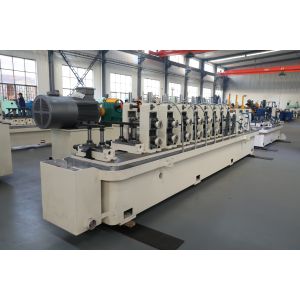
The High Precision Steel Pipe Making Machine with High Frequency Current is designed for manufacturers who need stable welded pipe production, accurate tube dimensions, and reliable weld seam quality.
This machine is suitable for producing round pipes, square tubes, rectangular tubes, structural tubes, furniture tubes, construction pipes, and general industrial welded pipes.
It is not only a steel pipe making machine.
It is a complete production solution for factories that need high precision forming, high-frequency welding, stable sizing, continuous cutting, and long-term production efficiency.
Many welded pipe manufacturers face the same production problems:
Pipe diameter is not consistent.
Weld seam quality changes during production.
Tube surface defects increase scrap.
Pipe straightness does not meet customer requirements.
Production speed is high, but finished pipe quality is unstable.
For buyers, the key question is not only:
“Can this machine produce steel pipes?”
The more important question is:
Can this high frequency pipe making machine produce accurate welded pipes continuously with stable quality and lower waste?
The answer depends on forming precision, welding current stability, squeeze roll control, sizing accuracy, cooling control, and cutting precision.
Conclusion:
A high precision pipe making machine should help the factory
control pipe quality from steel strip feeding to finished pipe
output.
Welded pipe production is a continuous forming and welding process.
A steel strip must be gradually formed into a tube shape before the strip edges are welded together by high-frequency current.
If any section of the line is unstable, the final pipe quality will be affected.
Poor forming accuracy can create an unstable welding gap.
Unstable welding current can cause weak welds, over-burning, or inconsistent weld seam strength.
Incorrect sizing adjustment can lead to diameter deviation, poor square tube shape, or pipe twisting.
The first common cause is poor roll pass design.
If the strip is bent too quickly, the material may develop edge waves, wrinkles, surface scratches, or unstable tube shape.
The second cause is unstable high-frequency welding.
If welding power, line speed, and squeeze force are not matched, the weld seam may become weak or irregular.
The third cause is insufficient machine rigidity.
When the machine vibrates during production, pipe straightness and weld seam position can become unstable.
The fourth cause is poor cooling and sizing coordination.
If the pipe enters sizing before proper cooling, final dimensions may change after production.
High precision is important because welded pipes are often used in downstream processes such as cutting, punching, bending, welding, galvanizing, threading, and assembly.
If the pipe dimension is unstable, every downstream process becomes harder.
That means higher labor cost, more rejection, and more customer complaints.
Conclusion:
Most pipe quality problems are not caused by one single section.
They usually come from the combined effect of forming, welding,
cooling, sizing, and cutting instability.
The solution is to use a steel pipe making machine with precision forming stands, stable high-frequency welding equipment, accurate sizing stands, and reliable cutting systems.
This production line is designed to improve:
Pipe dimensional accuracy.
Weld seam stability.
Pipe straightness.
Surface quality.
Production repeatability.
Material utilization.
Long-term output efficiency.
The forming section uses multiple roll stands to gradually shape the steel strip into a tube.
This reduces sudden deformation and helps keep the strip edges stable before welding.
Stable edge alignment is important because the high-frequency welding process depends on a controlled welding gap.
If the edges are not properly aligned, even a good welding system cannot produce a reliable weld seam.
High-frequency current heats the strip edges quickly before they are squeezed together.
The heating is concentrated near the tube edge, which helps improve welding efficiency and reduces unnecessary heat influence on the whole pipe body.
The welding result depends on correct matching of welding power, line speed, squeeze force, and material thickness.
A stable high-frequency welding system helps reduce seam defects and improves continuous production reliability.
After welding, the pipe passes through cooling and sizing sections.
The sizing section corrects the final pipe diameter, square tube dimension, rectangular profile, and straightness.
The cutting system cuts finished pipes to the required length while the line continues running.
Flying saw or cold cutting saw can be selected according to pipe size, wall thickness, speed, and end-face quality requirement.
Conclusion:
The machine is not only a forming machine or welding unit.
It is a full-process solution for high precision welded pipe
production.
| Item | Reference Specification |
|---|---|
| Product Name | High Precision Steel Pipe Making Machine with High Frequency Current |
| Equipment Type | High Frequency Welded Pipe Production Line |
| Pipe Type | Round Pipe, Square Tube, Rectangular Tube |
| Application | Construction Pipe, Furniture Tube, Structural Tube, Industrial Pipe |
| Round Pipe Range | 10–165 mm |
| Square Tube Range | 10×10 mm to 120×120 mm |
| Rectangular Tube Range | Customized according to project requirement |
| Wall Thickness Range | 0.5–6.0 mm |
| Raw Material | Carbon Steel, Galvanized Steel, Low-Alloy Steel, Stainless Steel Optional |
| Forming Method | Continuous Roll Forming |
| Welding Method | High Frequency Current Welding |
| Production Speed | 20–120 m/min, depending on pipe size and material |
| Cutting Method | Flying Saw or Cold Cutting Saw |
| Control System | PLC + HMI Optional |
| Roll Change Option | Standard Roll Change or Quick-Change System |
| Inspection Option | Eddy Current Testing, Diameter Measurement, Length Control Optional |
| Automation Level | Semi-Automatic or Fully Automatic |
| Power Supply | Customized according to local industrial voltage |
| Parameter Source | Based on pipe size, material thickness, steel grade, production speed, and factory layout |
Final specifications should be confirmed according to pipe drawings, wall thickness, material grade, production capacity, quality requirement, and workshop layout.
This machine can produce welded steel pipes used in construction, scaffolding, fencing, handrails, support systems, and light building structures.
For construction pipe applications, pipe straightness, weld seam reliability, and dimensional stability are important.
Stable production helps reduce rejection during project inspection and downstream fabrication.
The machine can also produce furniture tubes used for chairs, tables, beds, shelves, racks, and office furniture frames.
Furniture tubes usually require smooth surface quality and accurate size.
If the tube dimension is unstable, bending, punching, welding, and final assembly become difficult.
For square and rectangular structural tubes, the machine can produce tubes used in machinery frames, storage systems, agricultural equipment, transportation structures, and industrial supports.
For these products, corner shape, side flatness, straightness, and weld seam consistency are important.
The machine can also support general industrial pipe production for equipment manufacturing, mechanical parts, warehouse structures, and engineering use.
High precision production improves downstream cutting, drilling, bending, coating, and assembly efficiency.
Conclusion:
This machine is suitable for manufacturers who need stable welded
pipe quality across different pipe shapes and application
scenarios.
A typical high-frequency welded pipe production line includes:
Steel coil loading.
Uncoiling.
Strip leveling.
Shearing and butt welding.
Accumulator.
Roll forming.
High-frequency current welding.
External burr removal.
Cooling.
Sizing.
Straightening.
Cutting.
Finished pipe collection.
Optional inspection.
The steel strip enters the forming section after uncoiling and leveling.
Multiple forming stands gradually bend the strip into a tube shape.
The forming process must keep both strip edges aligned before welding.
Good edge alignment reduces weld seam defects and improves welding stability.
High-frequency current heats the strip edges at the welding point.
The squeeze rolls press the heated edges together to form a continuous weld seam.
The external burr can be removed after welding to improve surface quality.
The welding process must match material thickness, line speed, welding power, and squeeze force.
After welding and cooling, the pipe enters the sizing section.
Sizing rolls correct the final pipe dimension and improve roundness, square tube profile, or rectangular tube shape.
Straightening equipment helps improve the final pipe straightness before cutting.
The cutting system cuts the pipe into required lengths while the line continues production.
Flying saw cutting is suitable for continuous production.
Cold cutting saw can be selected when the buyer requires better end-face quality and less burr.
Conclusion:
The working principle is a continuous process of forming, welding,
cooling, sizing, straightening, and cutting.
Stable coordination between these sections determines the final
pipe quality.
If the main product is round pipe, the machine should focus on roundness, welding gap stability, sizing accuracy, and straightness.
If the main product is square or rectangular tube, the machine should focus on corner forming, side flatness, profile accuracy, and anti-twist performance.
The buyer should confirm round pipe diameter, square tube size, rectangular tube size, and wall thickness.
A wide size range requires stronger forming stands and more roll tooling planning.
A narrow size range may use a simpler and more economical machine configuration.
Carbon steel is commonly used for structural pipes and general welded pipes.
Galvanized steel requires better surface protection during forming.
Stainless steel requires careful roll material selection and surface scratch control.
Low-alloy steel may need stronger forming capacity and stable welding control.
High-frequency welding power should match pipe diameter, wall thickness, material grade, and production speed.
If welding power is too low, the seam may not fuse properly.
If welding power is too high, the pipe edge may overheat or burn.
The correct welding configuration should be selected by engineers according to real production parameters.
Higher speed can increase output, but only when forming, welding, cooling, sizing, and cutting are stable.
For high precision pipe production, stable quality is more important than maximum speed.
The best production speed is the speed that balances output, weld quality, and dimensional control.
Flying saw cutting is suitable for high-speed continuous production.
Cold cutting saw is suitable when the buyer needs better pipe end quality, less burr, and cleaner cutting surfaces.
The cutting method should be selected according to pipe material, wall thickness, speed, and customer acceptance standard.
For higher quality markets, optional inspection systems can be added.
These may include eddy current testing, online diameter measurement, length control, and weld seam monitoring.
Inspection configuration should match the buyer’s product application and customer requirements.
Before ordering the equipment, the buyer should confirm workshop length, crane capacity, foundation condition, power supply, cooling water system, and material flow direction.
A correct layout reduces handling problems and improves production efficiency.
Conclusion:
The right pipe making machine should be selected according to pipe
product, material, welding requirement, production capacity,
inspection needs, and factory conditions.
Zhangjiagang Zhongyue Metallurgy Equipment Technology Co., Ltd provides customized welded pipe production line solutions for different pipe applications, materials, and market requirements.
Our engineering support can include:
Pipe size and wall thickness analysis.
Material and welding requirement review.
High-frequency welding configuration discussion.
Machine structure design.
Roll tooling planning.
Factory layout support.
Installation guidance.
Operator training.
After-sales technical service.
Production optimization support.
We do not recommend choosing a pipe making machine only by pipe diameter.
A reliable welded pipe production solution should be selected according to pipe shape, wall thickness, material type, welding requirement, production speed, inspection level, and downstream application.
This helps customers reduce investment risk and avoid production problems after installation.
A high precision steel pipe making machine is a welded pipe production line designed to produce pipes with stable dimensions, reliable weld seams, good straightness, and consistent surface quality.
It usually includes uncoiling, forming, high-frequency welding, sizing, straightening, cutting, and finished pipe collection.
High-frequency current heats the steel strip edges quickly at the welding point.
After heating, squeeze rolls press the edges together to form a continuous weld seam.
This method is widely used for welded pipe production because it supports continuous production and efficient welding.
Yes.
The machine can be configured to produce round pipes, square tubes, and rectangular tubes if the required size range and wall thickness are within the machine design capacity.
Final capability depends on roll tooling, forming structure, sizing section, and welding system configuration.
Weld seam quality is affected by steel strip quality, edge forming accuracy, welding power, line speed, squeeze force, cooling control, and burr removal.
Machine rigidity and operator adjustment also influence long-term welding stability.
You should provide pipe diameter, square tube size, rectangular tube size, wall thickness, material grade, target production speed, annual output, cutting length, and inspection requirement.
With these details, engineers can recommend the suitable forming section, high-frequency welding system, cutting method, automation level, and roll tooling plan.
How High Frequency Current Welding Improves Steel Pipe Production Efficiency
This article can explain high-frequency welding principles, edge heating, squeeze rolls, weld seam control, and common welding defects.
Why High Precision Pipe Making Machines Reduce Scrap Cost in Welded Pipe Production
This article can analyze dimension deviation, weld seam failure, material waste, production downtime, and customer rejection cost.
High Frequency Welded Pipe Production Line Project Case Study
This case page can show pipe size range, material type, welding power configuration, production speed, cutting system, workshop layout, and finished pipe application.

1. Finish Product information:
| 1 | OD of the tube | 88.9mm-219mm |
| 2 | Wall thickness range | 2.0mm-8.0mm |
| 3 | Tube length | 4m-12m |
| 4 | Line speed | 50m/min |
2. Steel Pipe Making Machine production process:
pipe weled machine The high frequency straight seam Square steel tube making machine is used to level the fixed strip after slitting line and entry it to forming machine, bend toopenippe by roller, melt the strip edges throuh te High frequency current, squeeze and weld the pipe to be closedby squeeze roll, the high frenency Square steel tube making machine is also called ERW pipe mill.
Uncoiler→ Shear&welding machine→ Accumulator (Cage) →Forming machine→ HF welding→ Sizing machine→ Flying saw (Cold saw) → Run out table→straighten machine→hydro testing machine→ end facing machine→UT testing machine→Marking→Painting→weight→packing
3. Brief of Steel Pipe Making Machine application:
Steel Pipe Making Machine as known of steel tube manufacturing line, using the high frequency welder and rollers to produce all kinds of steel tube, profile, etc. also widely used in construction tubes, precision tubes, auto tubes, fence, heat exchanger, furniture tube, pressure tube production, with suitable finishing equipment, machine also can capable to produce the API pipe, gas transportation, and high standard tubes and so on.
4. Advantage:
Pipe production is an industry which need qualified machine and experienced technology link together to produce the products, that means the machine and experience are both important, our company are only Steel Pipe Making Machine manufacture whom use self-machine to produce steel tubes in large quantity, we are improving our machine with running them to get experienced technology. Choose us, you are not only get the machine from us, you are also get he experienced technology from us.
5. Market distribution:
At the beginning, we are manufacturing and selling the Steel Pipe Making Machines at domestic market only, during the opening and development of country policy, also with the improvement of the technology, we are start the export of the machinery since 2006, and now the Steel Pipe Making Machine has been export to more than 70 countries, the main market like Asia, North America, South America, Europe, Middle East, Southeast Asia and Africa. We are getting reputed in the world market.
6. Steel Pipe Making Machine specification
Accordingly to the market demands. We are given the standard models as blew, and this is for your reference only, the production range and main technical can be adjustable suppose your company have special requirement.
| Steel Pipe Making Machine Specification | |||
| Mill Model | OD range (mm) | Thickness range(mm) | Line Speed(m/min) |
| ZY-16 | 7.6-16 | 0.3-1.0 | 120 |
| ZY-20 | 10-25.4 | 0.3-1.5 | 120 |
| ZY-32 | 12.7-38.1 | 0.6-1.8 | 120 |
| ZY-45 | 16-50.8 | 0.7-2.0 | 110 |
| ZY-50 | 20-63.5 | 0.8-3.0 | 90 |
| ZY-60 | 25.4-76.2 | 1.0-3.2 | 80 |
| ZY-76 | 31.8-88.9 | 1.2-3.75 | 80 |
| ZY-89 | 33.4-101.6 | 1.2-4.5 | 75 |
| ZY-125 | 50.8-130 | 2.0-5.0 | 60 |
| ZY-165 | 76.2-168 | 2.0-6.0 | 50 |
| ZY-219 | 88.9-219 | 2.0-8.0 | 50 |
| ZY-273 | 89-273 | 3.0-12.0 | 40 |
| ZY-325 | 89-325 | 3.0-12.7 | 40 |
| ZY-406 | 114-406 | 4.0-16.0 | 40 |
| ZY-508 | 219-508 | 4.0-19.1 | 40 |
| ZY-610 | 273-610 | 4.0-19.1 | 40 |
| ZY-660 | 273-660 | 4.0-22 | 40 |

|
 Round Pipe Steel Pipe Making Machine With Forming Machine Stable
Water Transportation Galvanzied Steel Pipe Making Machine Flying Saw
Carbon Steel Pipe Forming Machine For Agricultural Lrrigation
High Speed Roll Forming Machine For Environment Industry Carbon
Low Cabon Steel Pipe Making Machine For Furnitire Tube Large Size
Api Pipe Milling Machine , Roll Form Machines Adjustable Automatic
High Precision Tube Extrusion Machine Heat Exchanger Speed 120 m / Min
ASTM Standard Steel Pipe Making Machine High Speed High Frequency Welder
SS Pipe Making Machine , Tube Forming Machine Flying Saw Profile
Stainless Steel Pipe Making Machine , Tube Forming Machine Round Pipe
Round Pipe Steel Pipe Making Machine With Forming Machine Stable
Water Transportation Galvanzied Steel Pipe Making Machine Flying Saw
Carbon Steel Pipe Forming Machine For Agricultural Lrrigation
High Speed Roll Forming Machine For Environment Industry Carbon
Low Cabon Steel Pipe Making Machine For Furnitire Tube Large Size
Api Pipe Milling Machine , Roll Form Machines Adjustable Automatic
High Precision Tube Extrusion Machine Heat Exchanger Speed 120 m / Min
ASTM Standard Steel Pipe Making Machine High Speed High Frequency Welder
SS Pipe Making Machine , Tube Forming Machine Flying Saw Profile
Stainless Steel Pipe Making Machine , Tube Forming Machine Round Pipe